top of page
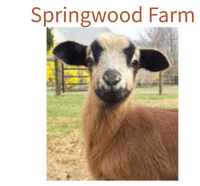
Frequently Asked Questions about Springwood Farm Barbados Blackbelly Sheep
Frequently asked questions
General
Infrastructure is key to being successful with sheep. You need: good perimeter fences to keep the sheep in and predators out; a place where they are fed and comfortable which will serve as a catch pen when you need to handle them; a reliable fresh water source; forage in the form of pasture and browse; hay if your climate or pastures are insufficient at any time of the year; shade if it is really hot; and shelter if it is really cold or if you want to increase lamb survival. Feedstuffs like grain or sheep pellets can be added for growth and are especially helpful for late pregnancy and lactation.
A relationship with a veterinarian is necessary to purchase antibiotics should you need them, and also will be essential when a health condition arises that you do not know how to handle yourself.
A typical starter flock is 3 ewes with either of the following: two unrelated rams or one ram and a wether. A wether is a castrated ram who can be housed with either rams or ewes. Sheep are flock animals so need to be ideally pastured and housed with other sheep. We do not recommend keeping a ram with ewes full time because monitoring lambing is impossible, which can result in less successful outcomes. Rams can injure newborn lambs and harrass lactating ewes which reduces milk production. Also in our experience, rams tend to get more aggressive with people the longer they are kept with ewes, and safety around rams is very important.
Wethers who are tame can help you manage these normally skittish sheep. We do not need to use herding dogs to move our sheep because we have tame sheep to lead the groups.
2026 prices are as follows:
Registered rams or ewes are $450 each
Ewes who are bred and confirmed pregnant are $550 each
Wethers (friendly castrated rams who are so useful in many ways - see FAQ on wethers) are $550
Butcher rams (young unregistered rams intended for raising to slaughter weight) are $350
Occasionally we have other categories so don't hesitate to ask.
We tailor sheep sales to the individual buyer's needs and wants, so we might not have what you want right away. You will have the opportunity to visit and discuss the selected sheep before purchase. Our sheep are free from foot rot, OPP, CL, and Johnes disease. You will get a written health history and documentation of scrapie DNA status. We coach and mentor all our buyers (and even some folks who don't buy from us). We can show you how to do body condition scoring and FAMACHA scoring (a way to quickly tell if your sheep is anemic) to monitor the health of your sheep. We can help you decide mating schemes which work with your sheep.
We want you to be successful with your Barbados Blackbelly sheep.
A few sheep, mostly males but occasionally a female, are tame enough to make good pets. If that is your interest, be sure to let us know so that we can select suitable animals. You may have to be patient and wait until the right ones are born!
Be careful when you buy sheep that you are not buying hidden diseases which will affect future success with your flock. Like the Covid 19 virus, some of these diseases can be carried by individuals showing no symptoms but can infect other sheep on your farm and thereby cause disease and potentially death in the future. We ourselves made such a mistake in purchasing our initial sheep and brought OPP to Springwood Farm. To correct this, we did extensive testing, quarantining, and selective euthanasia over a three year period between 2017 and 2020 to finally become OPP free.
If you are adding purchased sheep to an established flock, be sure to follow your veterinarian's advice about quarantine and testing the new animals before mixing them together.
To learn more about each condition, look on the Resources Page for these diseases to avoid:
Ovine Progressive Pneumonia (OPP)
Foot Rot
Caseous Lymphadenitis (CL)
Johne's Disease
Scrapie
The Barbados Blackbelly Sheep Association International (BBSAI) has been registering and promoting BB sheep for over 25 years. BBSAI also registers and promotes the sheep breed developed in the US years ago by crossing BBs with sheep breeds which grow large horns - now called the American Blackbelly. Below are some photos of American Blackbelly sheep.
Springwood Farm only has the hornless sheep, also called polled - the Barbados Blackbelly sheep. Horned animals have their own pros and cons, so be sure you are clear about what you want.
The BBSAI website contains volumes of information about both breeds, including husbandry, health, marketing, history, a breeder directory and more. You can see the pedigrees and photos of all registered sheep on the website under the tab 'Book of Registry.'
The Livestock Conservancy is a nonprofit membership organization. Our mission is to protect endangered livestock and poultry breeds from extinction. Included in our mission are over 150 breeds of donkeys, cattle, goats, horses, sheep, pigs, rabbits, chickens, ducks, geese, and turkeys. To put our mission into context, in 2006 the United Nations Food and Agriculture Organization (FAO) estimated that we lose an average of 2 domestic animal breeds each week. In the past fifteen years alone, the FAO has identified the extinction of 300 out of 6,000 breeds worldwide, with another 1,350 in danger of extinction.
In today’s large-scale agricultural systems, only a relatively few highly specialized breeds are used to supply a majority of the world’s food resources. 3/4 of the world’s food supply draws on just 12 crops and 5 livestock species. This places the world’s food supply at risk if anything should happen to these breeds such as disease, irreversible adverse genetic mutation, or climate change.
The Livestock Conservancy is the leading organization working to stop the extinction of these breeds in the United States – ensuring the future of our agricultural food system.
Pam and Will are proud lifetime members of and donors to this wonderful organization. We hope you will support them too, for the good of us all.
bottom of page